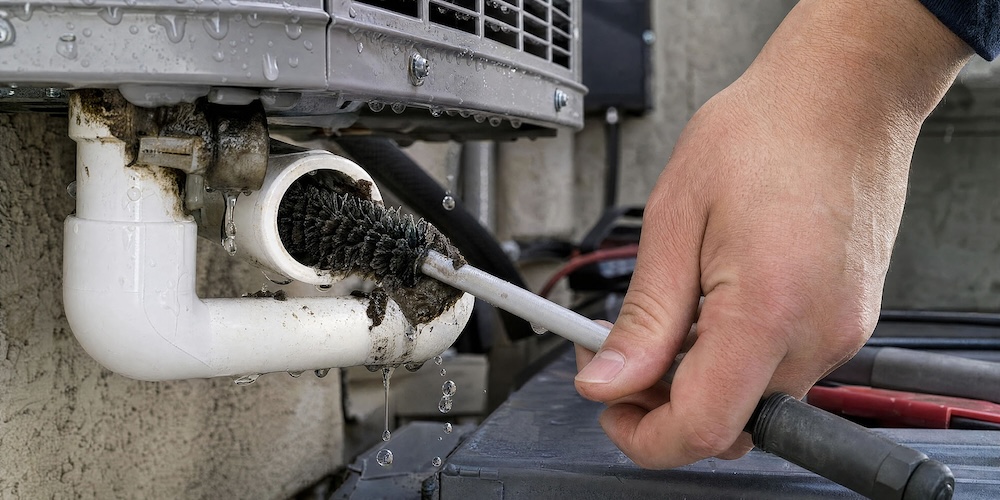
If you’re asking, “Why is my air conditioner leaking water?” there are a few places we’d start. The condensate drain may be clogged, the evaporator coil could be frozen, or the drain pan may be damaged. It could also be a condensate pump or installation problem. The leak may not look serious at first, but water can spread into drywall, insulation, flooring, and nearby electrical components while the system’s running.
Where Does the Water Come From?
Your air conditioner removes heat and moisture from indoor air. Moisture collects on the cold evaporator coil, drips into a drain pan, and exits through the condensate drain line.
Houston air conditioners may remove a lot of moisture during hot, humid weather. That means more water moving through the drainage system and more opportunity for buildup or drainage problems.
Water outside near the condensate drain may be normal. Water around the indoor unit, coming through a ceiling, or collecting near a vent is not.
1. The Condensate Drain is Clogged
Cause: This is one of the first things we check when an AC is leaking water. The drain line stays wet during the cooling season, so algae, dirt, and other buildup can collect inside and eventually block it. Once the water has nowhere to go, it backs up into the pan and may spill around the indoor unit.
Solution: The line needs to be cleared, but we also want to check the pan, fittings, and where the line drains outside. If the AC stopped running around the same time the leak appeared, the float switch may have shut the system down before the pan overflowed.
2. The Evaporator Coil Froze
Cause: A frozen coil usually means the system has an airflow or refrigerant problem. It could be a dirty filter, blocked return, dirty coil, blower issue, or low refrigerant. Then the ice starts melting and you end up with more water than the drain pan can manage.
Solution: Shut off the cooling and let the ice thaw. You can check the filter while the system’s off, but changing it may not solve the actual problem. If the coil freezes again or the airflow still feels weak, it’s time to have the system inspected.
3. The Drain Pan is Cracked or Rusted
Cause: The drain pan sits below the evaporator coil and catches water as it drips off. Metal pans can rust through over time, and plastic pans sometimes crack or move out of position. Once that happens, the water may leak before it ever reaches the drain line.
Solution: A damaged pan usually needs to be replaced. Some systems also have a secondary pan below the air handler, especially when the equipment is in an attic. Both pans should be checked because the water you see may have already passed through the main pan.
4. The Drain Line is Damaged or Installed Incorrectly
Cause: A drain line can come loose at a connection, crack, or sag enough to hold water. It also needs the right slope so condensation can keep moving toward the drain. If the pitch, trap, or venting is wrong, backups may keep happening even after someone clears the line.
Solution: The line may need to be reconnected, repaired, or rerouted. This is worth checking if the AC has leaked more than once and drain cleaning only seems to fix it for a short time.
5. The Condensate Pump Stopped Working
Cause: Some systems cannot move condensate outside using gravity alone, so they have a small pump that collects and removes the water. If the motor fails, the float sticks, or the discharge tube becomes blocked, the reservoir can overflow.
Solution: The pump and tubing need to be inspected. Sometimes buildup can be cleaned out, but a failed pump will have to be replaced. Shut the system off if water is getting close to the pump wiring or other electrical components.
6. The Equipment or Ductwork is Sweating
Cause: Not every puddle comes from the drain system. Moisture can collect on the outside of an air handler, refrigerant line, duct, or supply vent when humid air reaches a cold surface. We see this with missing insulation, air leaks around vents, high indoor humidity, or ductwork running through a hot attic.
Solution: Replacing damaged insulation may help, but that is not always the whole repair. The technician may also need to check airflow, duct leakage, indoor humidity, and gaps around the vent. If you only dry the area or replace the insulation without finding the reason it got wet, the moisture will probably return.
What Should You Do When Your AC Is Leaking?
A small amount of water can spread farther than it looks, especially when the air handler is above a ceiling. Turn off the system if water is actively spreading, coming through drywall, or getting close to electrical equipment.
You can safely do a few basic checks…
- Look at the air filter and replace it if it is dirty.
- Check for visible ice on the refrigerant line or indoor unit.
- Move furniture and other belongings away from the leak.
- Use towels or a container to limit water damage.
- Check the outdoor end of the drain line for an obvious blockage.
Do not remove equipment panels or try to handle refrigerant components yourself. Pouring harsh drain-cleaning chemicals into the line can also damage HVAC components or create a safety problem for the technician working on it later.
Call for HVAC service if the AC is not cooling, the coil is frozen, the drain pan is overflowing, or the water returns after cleanup.
Stop the AC Leak Before it Spreads!
Finding water near the AC does not tell you the full problem. Cold Air Pros can inspect the coil, drain line, drain pan, airflow, and condensate pump to find where the water is coming from and why. Schedule air conditioner repair if your system is leaking, freezing, or no longer cooling correctly. Regular air conditioner maintenance can also help catch drain buildup and worn components before they leave water around the indoor unit.
Contact Cold Air Pros to schedule AC service in Houston or a surrounding community.