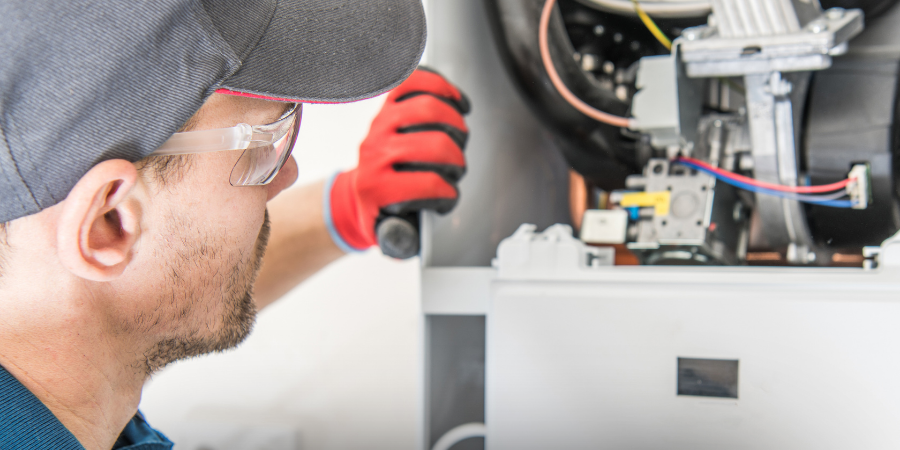
The first cold front is a lousy time to find out your heater won’t start. You’ve pulled out the blankets, switched the thermostat, and now the vents aren’t giving you much. Our advice? Give the equipment a trial run before you need it. Here’s how to prepare your heating system for winter, including the checks you can handle and the work we recommend leaving to a technician.
Test Your Heat and Check the Thermostat
Choose a mild day when you can stay home while the system runs. Set the thermostat to Heat, raise the temperature a few degrees above the room temperature, and give the equipment time to start. Setting it much higher won’t heat the house faster.
Check that air reaches the rooms and the indoor temperature begins rising. A heat pump’s supply air may feel less hot than a gas furnace’s, so judge it by its ability to warm the home rather than expecting the same vent temperature.
While you’re at the thermostat:
- Replace batteries if your model uses them and they’re due.
- Review programmed schedules left over from cooling season.
- Check that the fan setting matches the equipment’s instructions. Auto is a common setting for normal operation.
A brief dusty odor can occur when heating starts after months of inactivity. A persistent burning smell, burning-plastic odor, or loud banging needs attention. Shut the system off and arrange heating repair rather than repeatedly restarting it.
If you smell gas, leave the home immediately. Do not operate switches or use a phone inside. Call your gas utility’s emergency line or 911 from a safe location outside.
Check the Air Filter and Clear Indoor Vents
After a long Houston cooling season, don’t assume the filter is ready for winter. Heating and cooling commonly use the same filter and ductwork.
With the system off, inspect the filter and replace it if dirty or due under its recommended schedule. Match the required size and airflow direction. If you want to change filter types, check equipment compatibility first; a more restrictive filter can cause airflow problems.
Walk through the house and move furniture, rugs, and stored items away from supply registers and return grilles. Keep registers open unless your system was specifically designed for a different arrangement.
Also clear storage away from the furnace or air handler. Paint, cleaning chemicals, cardboard, and other household items do not belong against heating equipment. Follow the manufacturer’s clearance requirements.
Clear Debris Around Your Outdoor Heat Pump
This step applies if your home uses a heat pump. Unlike an outdoor AC condenser paired with a furnace, a heat pump’s outdoor unit operates during heating season.
Remove loose leaves and yard debris around the cabinet, and maintain the manufacturer’s required space around it. Do not wrap or cover a heat pump that needs to run.
During cold, damp weather, a light coating of frost can form on the outdoor coil. The system’s defrost cycle normally removes it, and you may see steam during that process. Thick ice that remains or keeps building up deserves an inspection. Do not chip it away or pour hot water over the equipment.
Test Your Carbon Monoxide Alarms
If your home has a gas furnace or other fuel-burning equipment, working carbon monoxide alarms belong on your winter checklist. Carbon monoxide has no smell, so you cannot rely on your nose to detect it.
The Consumer Product Safety Commission recommends carbon monoxide alarms on every floor and outside sleeping areas. Test them monthly, and follow each alarm’s instructions for battery replacement, placement, and expiration dates.
If a CO alarm sounds, get everyone outside immediately and call 911. Do not stay inside to find the source.
An electric furnace or heat pump does not produce carbon monoxide through combustion, but other appliances, an attached garage, or a generator can still create a risk.
Schedule Professional Heating Maintenance
A successful test run tells you the heater starts. It does not tell you the heat exchanger, electrical components, or safety controls are in good condition.
That’s why it’s a good idea to schedule heating maintenance before cold weather settles in. At Cold Air Pros, inspections depend on the equipment in your home. Our heating maintenance includes checks of:
- Gas furnace safety: Heat exchanger condition and possible carbon monoxide risks
- Electrical components: Connections, controls, signs of wear
- Operating sequence: Startup, heating operation, shutdown
- System condition: Performance concerns and parts that may need repair
We explain what we find and recommend repairs based on the equipment’s condition. A furnace and a heat pump need different checks, so the service should reflect the system you actually have.
For a broader view of seasonal service, our guide to what HVAC maintenance includes explains how maintenance differs from a repair visit.
Get Your Heat Ready with Cold Air Pros
Houston weather doesn’t always give you much time between short sleeves and reaching for the thermostat. Get the heater checked while leaving it off for a repair is still an inconvenience you can plan around.
At Cold Air Pros, we help homeowners prepare furnaces and heat pumps for colder weather. Our HVAC maintenance plans can help you stay on schedule with seasonal service. Contact our team to schedule your heating tune-up.

